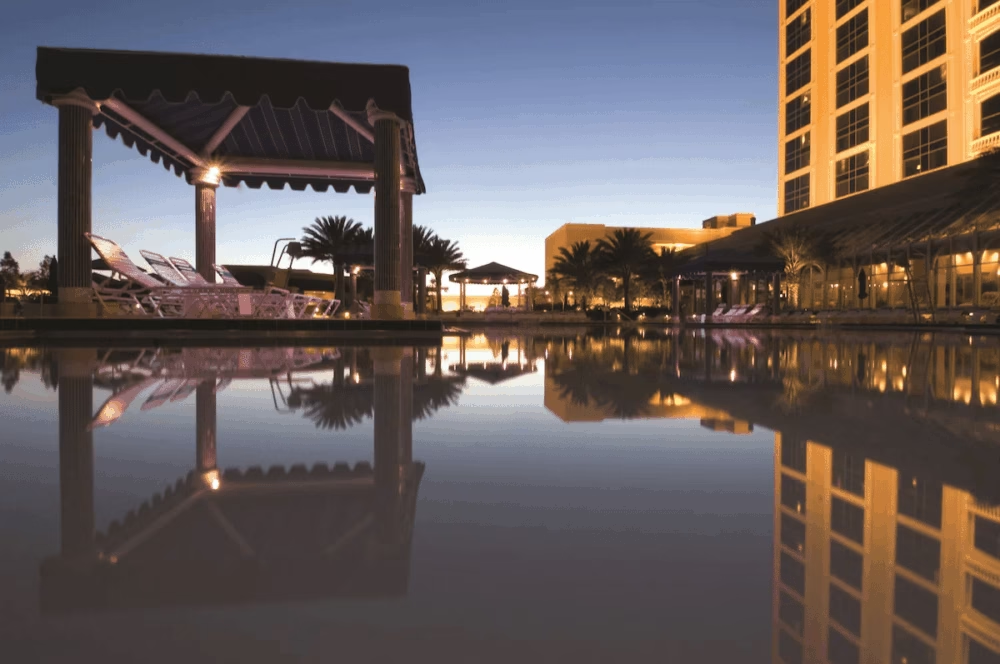
Hotel Beau Rivage, Biloxi, Mississippi
The hotel industry doesn’t like short-term rentals,
The hotel industry has long resisted competition. The rise of the Internet and the rapid growth of short-term rental platforms intensified that opposition.
Instead of focusing primarily on expanding hotel development, many major hotel companies are now devoting substantial resources to stemming the growth of short-term rentals across the country.
These efforts are often coordinated through lobbying groups such as federal and state hotel and lodging associations. These organizations represent large corporate brands – including Hilton, Marriott, MGM Resorts and Caesars – and their main objective is to increase industry revenues. Limiting short-term rentals is an important strategy for hotels to maintain control over local accommodation markets.
Antitrust laws exist to prevent this type of behavior.
Federal antitrust laws are designed to preserve fair competition by prohibiting conduct that suppresses market entry or artificially inflates prices. They exist to prevent monopolistic behavior, protect consumers from high costs, and ensure a healthy marketplace with diverse choices.
Yet in many jurisdictions, hotel industry groups and local governments have collaborated to create policies that effectively outlaw short-term rentals even in owner-occupied homes.
Collusive conduct protects and burdens existing hotel operators from competition
Homeowners and consumers.
Biloxi, Mississippi, is one of the clearest and most disturbing examples.
Biloxi demonstrates how government and industry can collude to stifle competition.
Biloxi’s City Council consists of seven members, one of whom – Councilman Kenny Glavan – is also
President of the Mississippi Hotel and Lodging Association and an executive affiliated with several hotels in Biloxi. Despite this apparent conflict of interest, Mr. Glavan has repeatedly pushed for stricter short-term rental rules without recusing himself.
Local reporting at the time noted that in Biloxi, “the lobbyists are virtually the government,” and the city’s policymaking process reflected this.
Under ordinances pushed in part by Mr. Glavan, Biloxi dramatically expanded restrictions on short-term rentals. The city went further by providing hotels and accommodation
The association – the industry’s own trade group – has a formal role in handling permit applications. As a result, short-term rental applicants were forced to submit requests directly to their potential competitors.
This system is contrary to a fair regulatory system. By restricting or preventing entry into the market, the city and the hotel lobby effectively isolated existing hotels from competition. Such conduct proximately harms consumers through higher prices, fewer housing options, and lower overall quality.
Between 2015 – the last year before Biloxi began enforcing these restrictions – and 2025, average daily room rates in Biloxi increased by more than 50 percent. Rather than protecting residents or preserving housing, these policies served to enrich hotel officials.
Airbnb sues Biloxi for violating federal antitrust laws
Airbnb and a local Biloxi host recently sued Airbnb, Inc., alleging violations of federal antitrust laws. and filed a lawsuit against the city in Patrice Perillo v. City of Biloxi. This appears to be the first case in which plaintiffs argue that a local government, in coordination with existing hotel operators, conspired to prevent short-term rentals from competing in the housing market.
It will be important to keep an eye on litigation. This raises fundamental questions about the limits of
Municipal regulatory authorities, appropriate role of industry participants in policy making, and
Whether local governments can legally delegate regulatory power to the same entities that stand to benefit from restricting competition.
A call for sensible, competition-focused policy
Travelers United hopes that policymakers and the public will pay close attention to this matter.
The situation in Biloxi illustrates the dangers of allowing industry lobbyists to influence – or in some cases directly administer – regulatory frameworks intended to control their competitors.
Short-term rental policy should support fair competition. They must protect consumer choice. They should also allow homeowners to participate in the housing market without facing barriers created to benefit established hotel interests.
The Biloxi case makes clear that many current policies fail these basic principles. It is time for a more fair, transparent and competition-friendly approach to short-term rental regulation.
Also read:
Ned’s 2025 holiday gift suggestions for travelers
Prepare in advance for airline delays and cancellations
Lauren joined Travelers United in 2015. Founded Kill Resort Fees, the only site dedicated to eliminating hidden hotel resort fees. Armed with an arsenal of frequent flyer miles and some extreme budgeting skills, Lauren traveled the world to 37 countries. Accomplishments include eating at the world’s largest restaurant in Syria, bungee jumping off the Victoria Falls Bridge on the Zambia/Zimbabwe border, meeting Anthony Bourdain at a Mexican restaurant in Cambodia, and cage diving with Great White Sharks in South Africa.