States have electronic toll collection systems in which there is no human collecting the toll and no way to use a credit card to pay the toll.
If a traveler finds it impossible to pay electronic toll collection, continue reading. Many travelers decide to travel by car. Unfortunately, they sometimes face the impossibility of paying the toll.
New automated toll collection systems installed to save money now cost drivers more. How can we avoid the need to become a toll scofflaw?
The problem lies in money-saving systems.
It is the system’s fault. Unfortunately, when encountering the electronic toll collection system the traveler has to pay fines and additional charges.
More and more travelers on the country’s highways come to toll on roads without manual toll collection system. These roads only support electronic toll collection systems. However, Travelers United believes that out-of-state travelers without a local FastPass, E-ZPass, SunPass or other local toll-collection pass should not be penalized. Read these tips. They can help.
You can avoid problems, but you have to plan
Travelers should research what types of toll-pass systems operate in the state or route they plan to travel. Knowing the toll-collection systems on your roads will help frequent travelers take measures to avoid fines. Based on that research, choose your self-protection.
1. Bring your own toll pass.
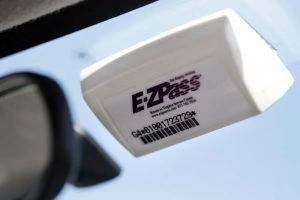
E-ZPass, issued in many East Coast and Midwest states, works in connected states. Travelers from Maine to South Carolina and western Illinois can pay all their tolls with a single electronic toll collection system.
Wikipedia’s E-ZPass page says:
The E-ZPass Interagency Group (IAG) consists of 37 member agencies operating within 16 states. They use the same technology and allow passengers to use the same transponder on toll roads throughout the network. Since its creation in 1987, various independent systems use the same technology. They have been added to the E-ZPass system, which includes I-Pass in Illinois and NC Quick Pass in North Carolina.
SunPass has a new program where SunPassPro now allows use of E-ZPass in Florida.
Also Read: Why the Weakest Link of Customer Service Haunts Every Business?
2. Buy a local pass.
Most of the complaints regarding automated tolls appear to originate in Florida. Florida’s SunPass electronic toll collection system can be purchased at thousands of locations such as Publix grocery stores and CVS drug stores.
The SunPass website says:
The SunPass Portable Transponder is priced at $19.99 plus tax and the SunPass Mini Sticker Transponder is priced at $4.99 plus tax (all out-of-state customers must pay a flat 6 percent sales tax). Transponders are available online at SunPass.com and at all authorized SunPass retailers. Both units allow motorists to deduct toll electronically from a prepaid account.
The SunPassPRO page states that E-ZPass holders can use them on Florida roads.
In California, joining the Fastrack system is free, and purchasing its toll tags is easy.
Anyone with a mailing address in the United States is able to sign up for a Fastrack account. Purchase a toll tag at a local retail store location and activate it through the new account enrollment process. Opening and maintaining a Fastrack account is free; You only pay for your toll. A security deposit may be required for the tag, but it will be refunded to you in full when you return the toll tag to Fastrack.
Even for short trips to the Bay Area, sign up for a Fastrack account. FastTrack allows you to use express lanes, qualify for carpools and bridge toll discounts, cross toll bridges without stopping at a toll booth, and even pay for parking at San Francisco International Airport (SFO). And, Fastrack operates throughout California. Your FasTrak toll tag works wherever you see the FasTrak logo displayed, including Southern California toll roads.
Similar electronic toll collection systems exist in much of the United States.
3. Look carefully for signs that allow payment of toll where there is no alternative.
I was once on a highway in California without a credit card or human toll-payment option. However, after passing through the toll, I saw signs instructing those who could not pay the toll to call the 800 number to make the payment. I called. The toll “stolen” never reached my rental car company. I experienced a similar incident on the Dulles Toll Road between the airport and the DC Beltway.
Once again, here is the Fastrack page with instructions.
The Fastrack Customer Service Center, including a customer service call center and in-person counter, is available during regular hours of operation and can assist you with issues with new accounts, account updates, payments and mistakenly received tolls. Simply call 1-877-BAY-TOLL (1-877-229-8655) and follow the prompts. You can also email the Customer Service Center using their online form.
The Dulles Toll Road has a similar phone system for paying missed tolls.
Monday through Friday, 7am to 7pm, for inquiries regarding EZ Pass, to pay missed tolls or to receive assistance with toll violations, contact the Customer Service Center at (877) 762-7824.
4. Pay for the toll collection pass when renting a car.
If you are not traveling in your automobile, purchase a local pass. The easiest, but often the most expensive system is to purchase the ability to pay your tolls with the rental car company. Virtually all rental car companies add a fee for using their toll-payment systems. Unfortunately, many of these programs cost a daily rate. This will be charged during the entire rental period, even when not driving or using toll roads.
Also Read: 7 Mistakes to Avoid at the TSA Airport Security Checkpoint
Avoiding these automatic tolls requires planning or paying additional fees. However, travelers should be aware of the dangers of the automated toll-collection system. It seems that the state never takes responsibility. Whenever commuters pass through a toll, they get stuck with the fee if they are unable to pay by calling the toll collection office. The penalties are higher.
Charlie Leocha is president of Travelers United. He has been in Washington, DC for the past 14 years working with Congress, the Department of Transportation and industry stakeholders on travel issues. He was the first consumer representative on the Aviation Consumer Protection Advisory Committee appointed by the Secretary of Transportation from 2012 to 2018.